
Topics Covered:
Helpful tools for this guide
Table of Contents
- How Long Does It Take to Read 10,000 Words?
- If You're Below Average
- If You're Reading at Skim Speed
- What the Research Says About Reading Speed
- How Long Does It Take to Read 10,000 Words Aloud?
- Words Correct Per Minute: The Number Most Guides Skip
- Worked Example
- Skimming vs Reading vs Studying: Three Different Timelines
- Why the Gap Is So Large
- How Long to Listen to 10,000 Words as an Audiobook
- The Audiobook Math
- What Does 10,000 Words Actually Look Like?
- A Useful Comparison
- The Mistake That Can Make Reading Speed Look Too High
- Where the Error Happens
- The Correct Method
- Fiction vs Non-Fiction: Does Genre Change the Time?
- The Time Difference
- Raw Speed vs Words Correct Per Minute
- FAQ
- How long does it take to read 10,000 words?
- How long does it take to read 10,000 words at 250 WPM?
- How long does it take to read 10,000 words out loud?
- How long does it take to read 10k words at 200 WPM?
- How long does it take to read 10k words at 300 WPM?
- Is 10,000 words a long book?
- What's a good reading speed?
- Does skimming count as reading 10,000 words?
- Bottom Line
If you have a 10,000-word report, thesis, assignment, or document to read, the first question is usually simple: how much time should you set aside? The answer depends on your reading speed, how carefully you read, and whether you are reading silently, studying, skimming, or reading aloud.
Quick answer: It takes about 40 minutes to read 10,000 words at 250 words per minute. A slower reader at 200 WPM may need about 50 minutes, while a faster reader at 300 WPM can finish in roughly 33 minutes.
You don't need to calculate it manually. Enter your text in the Reading Time Calculator to estimate your reading time instantly.
How Long Does It Take to Read 10,000 Words?
The formula is simple: divide the total number of words by your reading speed in words per minute.
| Reading Speed | WPM | Time for 10,000 Words |
|---|---|---|
| Slow reader | 200 | 50 minutes |
| Average reader | 250 | 40 minutes |
| Fast reader | 300 | About 33 minutes |
For most adults, reading 10,000 words silently will take about 33 to 50 minutes. Difficult material, note-taking, and unfamiliar vocabulary can make the same text take considerably longer.
If You're Below Average
A pace closer to 175 WPM is common when reading unfamiliar, technical, or difficult material. At that speed, 10,000 words takes around 57 minutes.
If You're Reading at Skim Speed
At around 400 WPM, you can move through 10,000 words in about 25 minutes. However, skimming usually means paying less attention to details, so comprehension may be lower than during normal reading.
What the Research Says About Reading Speed
The averages above are not simply guesses. A large meta-analysis by Marc Brysbaert published in the Journal of Memory and Language reviewed 190 studies involving roughly 18,573 participants. It reported an average silent reading speed of about 238 words per minute for non-fiction, around 260 WPM for fiction, and about 183 WPM for reading aloud.
The research also challenges the idea that readers can consistently reach extremely high speeds while maintaining full comprehension. Reading much faster than a normal pace often involves some degree of skimming rather than careful reading.
How Long Does It Take to Read 10,000 Words Aloud?
Reading 10,000 words aloud takes roughly 55 minutes at a speaking and reading pace of about 183 words per minute. The actual time can be longer when you pause for emphasis, pronunciation, breathing, or audience interaction.
If you're preparing a speech, presentation, narration, or voice recording, allow extra time instead of relying only on silent reading speed.
Words Correct Per Minute: The Number Most Guides Skip
Reading speed tells you how quickly you move through text, but it does not tell you how much of that text you understood correctly. That becomes more important when reading long academic or technical material.
WCPM = (Total words - Errors) / Time in minutes
Worked Example
Suppose you read 10,000 words in 42 minutes but miss or misunderstand about 250 words. That leaves 9,750 correctly processed words. Divide 9,750 by 42 and the result is about 232 words correct per minute.
This gives you a more useful picture of effective reading than raw speed alone.
Skimming vs Reading vs Studying: Three Different Timelines
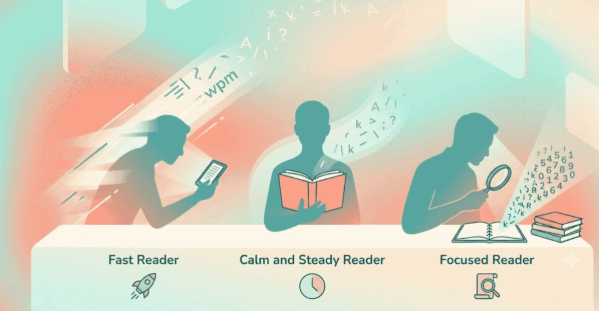
Reading 10,000 words can take very different amounts of time depending on how deeply you engage with the material.
| Mode | Typical WPM | Time for 10,000 Words |
|---|---|---|
| Skimming for main ideas | 450+ | About 22 minutes |
| Normal silent reading | 250 | 40 minutes |
| Studying with notes | 120 | About 83 minutes |
Why the Gap Is So Large
Skimming helps you move through the material quickly, but you may miss supporting details. Studying with notes is much slower because you stop to understand, highlight, review, and record important information.
That means a 10,000-word document that takes 40 minutes to read normally could take more than 80 minutes when studied carefully.
How Long to Listen to 10,000 Words as an Audiobook
Listening usually happens at a slower pace than silent reading. Audiobook narration commonly falls around 150 to 160 words per minute, although the exact pace depends on the narrator and material.
The Audiobook Math
At 155 WPM, listening to 10,000 words takes about 65 minutes. That is roughly 25 minutes longer than reading the same amount of text silently at 250 WPM.
What Does 10,000 Words Actually Look Like?
Reading time is easier to understand when you compare 10,000 words with familiar document lengths.
| Format | Approximate Equivalent |
|---|---|
| Double-spaced pages | About 40 pages |
| Single-spaced pages | About 20 pages |
| Typical blog posts at 1,500 words each | 6 to 7 posts |
| College essay assignments | 3 to 4 essays |
| Short novella chapters | 6 to 8 chapters |
A Useful Comparison
A 10,000-word text is closer to a long short story or short novella than a full-length book. At an average pace, most readers can finish that amount of text in well under an hour.
The Mistake That Can Make Reading Speed Look Too High
Reading-speed calculations can become inaccurate when seconds and minutes are mixed incorrectly. The safest method is to convert the total reading time into minutes before calculating words per minute.
Where the Error Happens
Suppose someone reads 560 words in 44 seconds. The 44 seconds first needs to be converted into minutes before calculating the reading rate.
The Correct Method
Forty-four seconds is about 0.73 minutes. Dividing 560 by 0.73 gives roughly 767 WPM. That result is unusually high for careful reading and may indicate that the reader was skimming rather than fully processing the text.
For a more realistic estimate, measure your pace over a longer passage and consider comprehension as well as speed.
Fiction vs Non-Fiction: Does Genre Change the Time?
Genre can affect reading pace. The reading-speed research discussed above found an average of about 238 WPM for non-fiction and around 260 WPM for fiction.
The Time Difference
At 260 WPM, reading 10,000 words of fiction takes about 38 minutes. At 238 WPM, the same number of words in non-fiction takes roughly 42 minutes.
The difference may come from sentence complexity, unfamiliar concepts, and the amount of information the reader needs to process.
If you're working with a digital document and don't know its length, use the Word Counter first so your reading-time estimate starts with an accurate total.
Raw Speed vs Words Correct Per Minute
How quickly you move through a page and how much you understand are not the same thing. Raw reading speed only measures the number of words you move through in a given amount of time.
Words correct per minute goes one step further by considering words you skipped, misread, or failed to understand.
For example, you might finish 10,000 words in 42 minutes but fail to process 250 of them correctly. In that situation, your effective reading rate is lower than your raw speed suggests.
If you want to improve your pace without sacrificing understanding, read How to Read Faster Without Losing Comprehension.
FAQ
How long does it take to read 10,000 words?
It takes about 40 minutes to read 10,000 words at 250 WPM. At 200 WPM, it takes around 50 minutes, while a 300 WPM reader can finish in roughly 33 minutes.
How long does it take to read 10,000 words at 250 WPM?
At 250 words per minute, reading 10,000 words takes about 40 minutes.
How long does it take to read 10,000 words out loud?
At around 183 words per minute, reading 10,000 words aloud takes roughly 55 minutes. Pauses and presentation style can make it take longer.
How long does it take to read 10k words at 200 WPM?
At 200 words per minute, reading 10,000 words takes about 50 minutes.
How long does it take to read 10k words at 300 WPM?
At 300 words per minute, reading 10,000 words takes about 33 minutes.
Is 10,000 words a long book?
No. It is closer to a long short story or short novella than a full-length book. It may equal roughly 40 double-spaced pages depending on formatting.
What's a good reading speed?
A reading speed between roughly 200 and 300 WPM is common for many adults, although the ideal pace depends on the difficulty of the material and how much you need to remember.
Does skimming count as reading 10,000 words?
Skimming helps you move through the text faster, but it usually provides less detailed understanding than careful reading or studying.
Bottom Line
It takes about 40 minutes to read 10,000 words at an average pace of 250 WPM. A slower 200 WPM reader may need around 50 minutes, while a faster 300 WPM reader can finish in about 33 minutes.
The same text may take roughly 55 minutes to read aloud, around 65 minutes to listen to as an audiobook, or more than 80 minutes to study carefully with notes.
For a personalized estimate, paste your text into the Reading Time Calculator.
Related Articles
Continue with closely related CountFlows guides.
Writing & Education
Academic Writing Guide: Structure, Examples & Tips for Students
A practical guide to academic writing, including structure, evidence, paragraph building, assignment command words, examples, citations, and editing.
Writing & Education
Essay Word Count Guide: How Long Is an Essay? (By Level)
Word count problems start at the outline stage, not the writing stage. Learn essay lengths by level, paragraph word counts, the exact 10% rule for common lengths, and where your word count actually goes.
Writing & Education
How Many Pages Is 2,000 Words? Single & Double Spaced
A standard page holds about 500 words single-spaced or 250 words double-spaced. See page estimates for essays, books, handwriting, speeches, and common word counts.